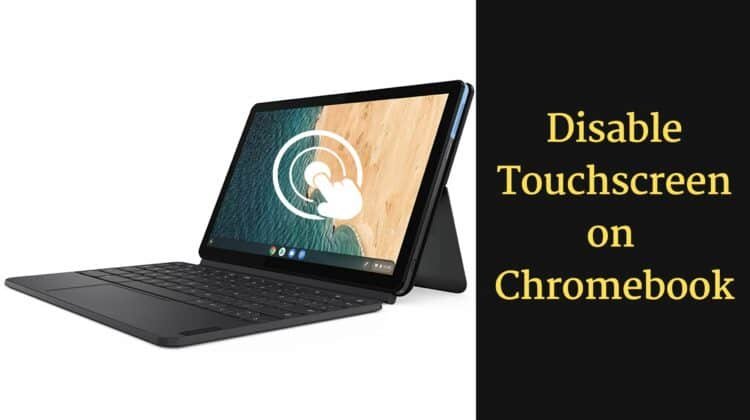
Navigating a Chromebook with its intuitive touchscreen feels natural, but there are definite reasons and scenarios for turning off Chromebook touch. From preventing accidental taps to boosting focus, knowing when and how to disable your device's touch capabilities can significantly enhance your user experience. It's about taking control, fine-tuning your machine to work precisely how you need it, whether you're tackling a complex project or simply handing your device to a curious child.
At a Glance: When & How to Disable Chromebook Touch
- Why disable it? Avoid accidental inputs, extend battery life, boost focus, keep the screen clean, prevent keyboard interference, and troubleshoot erratic behavior. It's also great for educational settings or young users.
- Quickest Method: Use Chrome Flags to enable a keyboard shortcut (Search + Shift + T).
- Built-in Option: Check your Chrome OS Settings, though this is model-dependent.
- Advanced Control: For tech-savvy users, terminal commands in Developer Mode offer granular control.
- Physical Fixes: Screen protectors or cases can physically block touch.
- Re-enabling: Just as easy as disabling, often with the same method in reverse.
Why You Might Want to Turn Off That Touchscreen
While a responsive touchscreen is a core feature for many Chromebooks, it's not always the best tool for every job. Understanding the specific situations where disabling touch makes sense empowers you to optimize your device.
Preventing Accidental Inputs
Picture this: You're engrossed in typing an important email, and your hand brushes the screen, sending your cursor flying or, worse, closing your tab. This "phantom touch" phenomenon is a prime reason many users choose to turn off Chromebook touch. Accidental gestures can interrupt workflows, cause frustration, and even lead to unintended actions, making a touch-free experience a godsend for precision tasks.
Boosting Focus & Productivity
For tasks demanding deep concentration—coding, writing, or detailed spreadsheet work—any distraction can be costly. The visual cues of a touchscreen (like finger smudges or the temptation to tap rather than use the trackpad) can subtly pull your attention away. By disabling touch, you create a more focused environment, encouraging consistent use of the keyboard and trackpad, which can lead to a more efficient workflow.
Extending Battery Life
While not a massive drain, an active touchscreen sensor consumes a small amount of power. Over time, especially for users who frequently toggle between modes or use their Chromebook for extended periods without charging, disabling touch can contribute to slightly better battery longevity. Every little bit helps when you're away from an outlet.
Maintaining Screen Cleanliness
Fingerprints, smudges, and oils are an inevitable part of touchscreen interaction. Consistently touching your screen means consistently needing to clean it. Disabling touch reduces the frequency of physical contact, helping your display stay cleaner for longer and preserving its visual clarity without constant wiping.
Avoiding Keyboard Interference
Some Chromebook models, particularly those with 360-degree hinges, can have their touchscreen interfere with keyboard usage when in certain orientations. If you're using your device like a traditional laptop but find the screen is responding to unintended touches from your hands resting near the keyboard, turning off the touch feature eliminates this conflict entirely.
Troubleshooting Erratic Behavior
Sometimes, a touchscreen might start acting up—registering touches where there are none (phantom touches), responding sporadically, or experiencing dead zones. Before considering a hardware repair, temporarily disabling the touchscreen is a crucial troubleshooting step. If the problems cease, it points directly to a screen issue rather than a broader system problem.
Educational and Specific Use Cases
Chromebooks are prevalent in schools, and touchscreens, while engaging, aren't always ideal.
- Standardized Testing: Many online tests require specific input methods and prohibit touch to ensure fairness and prevent accidental answers. Disabling touch ensures compliance.
- Young Children: For very young users, a touchscreen can sometimes be too sensitive or lead to unintentional navigation. Turning it off can simplify their interaction, allowing them to focus on keyboard and mouse skills or specific apps.
- School Chromebooks: IT administrators might disable touch universally to reduce wear and tear, prevent tampering, or ensure a consistent learning environment across devices.
The How-To Guide: Your Options for Disabling Chromebook Touch
Ready to take control? Here’s a breakdown of the most effective methods to disable your Chromebook’s touchscreen, from quick toggles to advanced commands.
Method 1: The Quick Toggle – Chrome Flags (Most Recommended)
This is often the most practical solution for most users, offering a fast and reversible way to manage your touchscreen with a simple keyboard shortcut.
How it Works: Chrome Flags are experimental features that Google allows users to test. One particular flag enables a debugging keyboard shortcut that can toggle your touchscreen.
Advantages:
- Speed: Instantly turn touch on or off with a key combination.
- Temporariness: Ideal for short-term needs or troubleshooting without permanent changes.
- Reversible: Easily switch back and forth as needed.
- No Data Loss: Doesn't affect your stored files or settings.
Warnings: - Experimental Nature: Chrome Flags are not stable features; they might behave unexpectedly.
- Availability: Not all flags are present on every Chrome OS version or device model.
- Updates: Major Chrome OS updates can sometimes reset flags to their default state, requiring you to re-enable them.
Steps to Enable the Toggle:
- Open Chrome Browser: Launch your Chrome browser on the Chromebook.
- Navigate to Flags: In the address bar, type
chrome://flagsand press Enter. - Search for "Debugging": Use the search bar within the flags page (Ctrl + F on most keyboards) and type "debugging keyboard shortcuts."
- Enable the Flag: Locate the flag labeled "#ash-debug-shortcuts" (it might appear slightly different depending on your OS version). Click the dropdown menu next to it and change its setting to "Enabled."
- Restart Chromebook: A prompt will appear at the bottom-right of your screen, asking you to restart. Click "Restart." Your Chromebook will reboot to apply the change.
Using the Keyboard Shortcut:
Once the flag is enabled and your Chromebook has restarted, you can now toggle the touchscreen at will.
- To instantly turn your touchscreen off or on, press Search + Shift + T.
You'll see a brief notification pop up, confirming "Touchscreen disabled" or "Touchscreen enabled," providing immediate feedback.
Method 2: Through Chrome OS Settings (Model-Dependent)
Some Chromebook manufacturers and newer Chrome OS versions integrate a native toggle within the system settings, offering a more official and stable way to manage your touchscreen.
How to Check for This Setting:
- Access Quick Settings: Click on the time/date displayed in the bottom-right corner of your screen. This will open the Quick Settings panel.
- Open Full Settings: Click the gear icon (⚙️) to open the main Chrome OS Settings window.
- Look for "Device": In the left-hand sidebar of the Settings window, scan for a section typically labeled "Device."
- Explore Subsections: Within the "Device" section, look for subsections like "Display," "Touchpad and stylus," or "Input devices." You're searching for an explicit "Touchscreen" toggle or a related setting that allows you to disable or enable it.
Alternative Locations:
If you don't find it directly under "Device," check:
- Accessibility settings: Some advanced input options might reside here.
- Advanced settings: Occasionally, specific hardware controls are nested deeper.
Model-Specific Notes:
This option is more common on newer Chromebook models, particularly those from brands like HP, which often include more granular hardware controls. If you don't find this setting, it simply means your specific Chromebook model doesn't support this native software toggle.
Method 3: Diving Deeper with Terminal Commands (For Advanced Users)
For those comfortable with command-line interfaces, using terminal commands offers precise control, though it requires entering Developer Mode, which comes with significant caveats. This method is best reserved for persistent issues or for users who need a more robust, albeit temporary, solution that doesn't rely on experimental flags.
Enabling Developer Mode (Crucial Warnings!):
Entering Developer Mode completely erases all local data on your Chromebook. This includes files, photos, downloads, and user settings. Always back up important data to Google Drive or an external drive before proceeding. The process is also irreversible without another full data wipe.
- Backup Your Data: Ensure all critical files are synced or moved off your device.
- Connect Charger: Plug your Chromebook into power to prevent interruption during the process.
- Enter Recovery Mode:
- Turn off your Chromebook.
- Hold down the Esc + Refresh keys simultaneously.
- While holding them, press the Power button. Release all keys once the recovery screen appears.
- Access Developer Mode: At the recovery screen (which usually shows a message about Chrome OS being missing or damaged), press Ctrl + D.
- Confirm & Proceed: You'll be prompted to confirm entering Developer Mode. Press Enter. Your Chromebook will then wipe its data and set up Developer Mode, which can take 15-20 minutes. It will restart multiple times.
Disabling Touchscreen via Crosh Terminal:
Once in Developer Mode (you'll see a warning screen at boot-up each time; just press Ctrl + D or wait for it to boot normally), you can use the terminal. - Open Crosh Terminal: Press Ctrl + Alt + T on your keyboard. This opens the Chrome OS shell (Crosh).
- Access the Shell: Type
shelland press Enter. This gives you access to a more powerful Linux-like command line. - List Input Devices: Type
xinput listand press Enter. This command lists all active input devices connected to your Chromebook. - Identify Touchscreen: Carefully examine the output. Look for entries that clearly indicate your touchscreen, such as "ELAN Touchscreen," "ATML Touchscreen," or similar. Note the
id=number associated with your touchscreen device. - Disable Touchscreen: Type
xinput disable [ID](replace[ID]with the actual ID number you noted in the previous step). For example, if your touchscreen ID was 12, you'd typexinput disable 12. Press Enter. - Verify Disablement: To confirm, type
xinput listagain. The status for your touchscreen device should now show "disabled."
Re-enabling: To bring touch back, simply use the same command but withenableinstead:xinput enable [ID].
Important Note: These terminal commands are temporary. They typically reset after your Chromebook restarts. For persistent disabling, advanced users would need to explore creating persistent configuration files, which is beyond the scope of a standard guide and carries higher risks.
Method 4: Analog Solutions – Physical & Hardware Workarounds
Sometimes, the simplest solution is a physical one. If software options aren't available or suitable, you can physically block touch input.
- Thick Screen Protector: Applying a thick, non-conductive screen protector can effectively dampen or entirely block the screen's ability to register touch input.
- Clear Plastic Overlay: A custom-cut piece of clear plastic taped over the screen can serve a similar purpose.
- Protective Cases: Some robust Chromebook cases are designed with bezels or covers that, when closed or positioned, can prevent accidental screen contact or even include touch-blocking elements.
Limitations: - Display Quality: These methods can sometimes slightly diminish screen clarity or responsiveness.
- Partial Effectiveness: Depending on the material, some ghost touches might still register.
- Temporary: These are physical barriers that can be removed.
- Additional Purchase: Requires buying specific accessories.
Method 5: External Devices – Letting Peripherals Take Over
While not a direct "disable" method, simply connecting a USB mouse and external keyboard can, on some Chromebook models, diminish the touchscreen's default responsiveness. The system prioritizes the external input, and you might find yourself naturally using the mouse and keyboard more, thereby avoiding screen touches altogether. It's a subtle behavioral shift that achieves a similar outcome for some users.
Method 6: Fine-Tuning with Accessibility Settings
Chromebooks offer a robust suite of accessibility options designed to customize interaction. While these won't completely disable the touchscreen, they can significantly reduce unwanted interactions.
- Access Settings: Go to Settings (gear icon) > Accessibility.
- Adjust Mouse/Touchpad Sensitivity: Reducing the sensitivity of your trackpad and mouse can make accidental taps less likely to register.
- Keyboard Input Settings: Explore features like "Sticky keys" (which hold modifier keys until another key is pressed) or "Slow keys" (which require a key to be pressed for a certain duration to register). While primarily for keyboard, these can indirectly make accidental screen interactions less disruptive by requiring more deliberate input elsewhere.
When to Keep Touchscreen Enabled: The Flip Side of the Coin
Before you rush to disable your touchscreen, remember the many benefits it offers. There are plenty of scenarios where an active touchscreen is not just useful, but essential.
- Android App Usage: Many Android apps are designed with touch-first interfaces, making them far more intuitive and enjoyable to use with a touchscreen.
- Digital Art & Note-Taking: For artists, designers, or students who use a stylus for drawing, sketching, or handwriting notes directly on the screen, a touchscreen is indispensable.
- Accessibility Needs: For users with certain motor impairments, touch input can be easier and more accessible than a trackpad or mouse.
- Tablet Mode: When you fold your convertible Chromebook into tablet mode, the touchscreen becomes your primary interaction method, making it perfect for casual browsing, reading, or media consumption.
- Casual Browsing & Navigation: Quickly tapping through web pages, zooming, or scrolling can often feel faster and more fluid with touch gestures.
- Multi-Modal Input: Using a combination of touch, keyboard, and trackpad can offer a highly flexible and efficient way to interact with your device.
- Presentations: During a presentation, directly touching the screen to highlight points or navigate slides can be more engaging than using a pointer.
Troubleshooting Common Touchscreen Quirks
If you're considering disabling your touchscreen because it's misbehaving, it's worth trying some diagnostic steps first.
Diagnostic Steps:
- Identify Symptoms: What exactly is happening? Phantom touches? Delayed response? Completely unresponsive in certain areas?
- Isolate Variables: Did the issue start after a Chrome OS update, installing a new app, or dropping the device?
- Check for Patterns: Does it only happen in certain apps? When the device is hot?
- Test Temporary Disabling: Use the Chrome Flags method (Search + Shift + T) to temporarily turn off the touchscreen. If the problems stop, it strongly suggests a touchscreen-specific issue.
Common Issues and Solutions:
- Phantom Touches:
- Solution: Thoroughly clean your screen with a microfiber cloth designed for electronics. Dust, dirt, or moisture can sometimes trick the screen into registering touches.
- Calibration: Some Chromebooks might offer a touchscreen calibration option in settings, though this is rare. Check your device's specific support documentation.
- Delayed Response/Lag:
- Solution: Ensure your Chrome OS is fully updated (Settings > About Chrome OS > Check for updates). A simple restart can also clear up temporary software glitches affecting responsiveness.
- Partial Screen Unresponsive (Dead Zones):
- Solution: This often points to a hardware failure. If updating and restarting don't help, contact your Chromebook manufacturer's support for a hardware inspection or repair.
- Interferes with Typing:
- Solution: Adjust your typing posture to avoid resting hands on the screen's bezel, or simply disable the touchscreen using one of the methods above while you're primarily typing.
Bringing Touch Back: How to Re-Enable Your Touchscreen
You've successfully turned off your touchscreen, but now you need it back. Re-enabling is typically as straightforward as disabling.
- If You Used Chrome Flags:
- Simply press Search + Shift + T again. The notification will confirm "Touchscreen enabled."
- Alternatively, you can go back to
chrome://flags, search for "#ash-debug-shortcuts," and change its setting back to "Default" (or "Disabled"), then restart your Chromebook. - If You Used Chrome OS Settings:
- Navigate back to the same "Device" or "Display" section in your Chromebook's settings.
- Toggle the "Touchscreen" switch back to the "Enabled" position.
- If You Used Terminal Commands (Developer Mode):
- Open Crosh terminal (Ctrl + Alt + T).
- Type
shelland press Enter. - Type
xinput listto identify your touchscreen's ID. - Type
xinput enable [ID](replacing[ID]with the correct number) and press Enter. Remember, these commands usually reset after a restart, so your touchscreen might re-enable automatically anyway.
Smart Practices for Managing Your Chromebook's Touchscreen
Managing your Chromebook's touchscreen effectively comes down to choosing the right tool for the job and maintaining good digital hygiene.
Choosing the Right Method
- For Occasional Needs or Troubleshooting: The Chrome Flags method with its quick keyboard shortcut is your best bet. It's fast, temporary, and doesn't require drastic system changes.
- For Permanent Disabling (if available): If your Chromebook offers a native toggle in Chrome OS Settings, use it. It's the most stable and integrated software solution.
- For Advanced Control (with caution): Terminal commands in Developer Mode are powerful but come with the risk of data loss and are more complex to manage long-term. Only use this if you understand the implications.
- For Short-Term, Non-Technical Needs: Physical solutions like screen protectors are a simple, albeit limited, workaround.
Maintenance and Awareness
- Keep Chrome OS Updated: Software updates often include bug fixes and performance improvements that can resolve touchscreen glitches.
- Regular Screen Cleaning: Even if touch is disabled, keeping your screen clean improves clarity and prevents dust buildup that could interfere if you re-enable touch.
- Monitor Chrome Flag Availability: Since flags are experimental, they can be removed or changed with updates. Be aware that your shortcut might stop working after a major Chrome OS release.
- Backup Your Data: This is a universal best practice, but especially critical if you ever consider enabling Developer Mode for terminal commands.
Before You Begin
- Backup Critical Data: Always, always back up your important files, especially if you're venturing into Developer Mode.
- Test in a Low-Stakes Environment: If you're unsure about a method, try it when you don't have urgent work to do, allowing you to troubleshoot without pressure.
- Have a Re-enabling Plan: Know how to turn touch back on before you turn it off!
- Consider if Temporary Solutions Suffice: Often, a quick toggle from Chrome Flags is all you need, saving you from more complex adjustments.
Ultimately, your Chromebook is a versatile tool. Knowing the reasons and scenarios for turning off Chromebook touch gives you the power to adapt your device to your precise needs, creating a more efficient, focused, and enjoyable computing experience. Whether you're a student, a professional, or simply someone looking for a cleaner screen, these methods provide the control you need.